
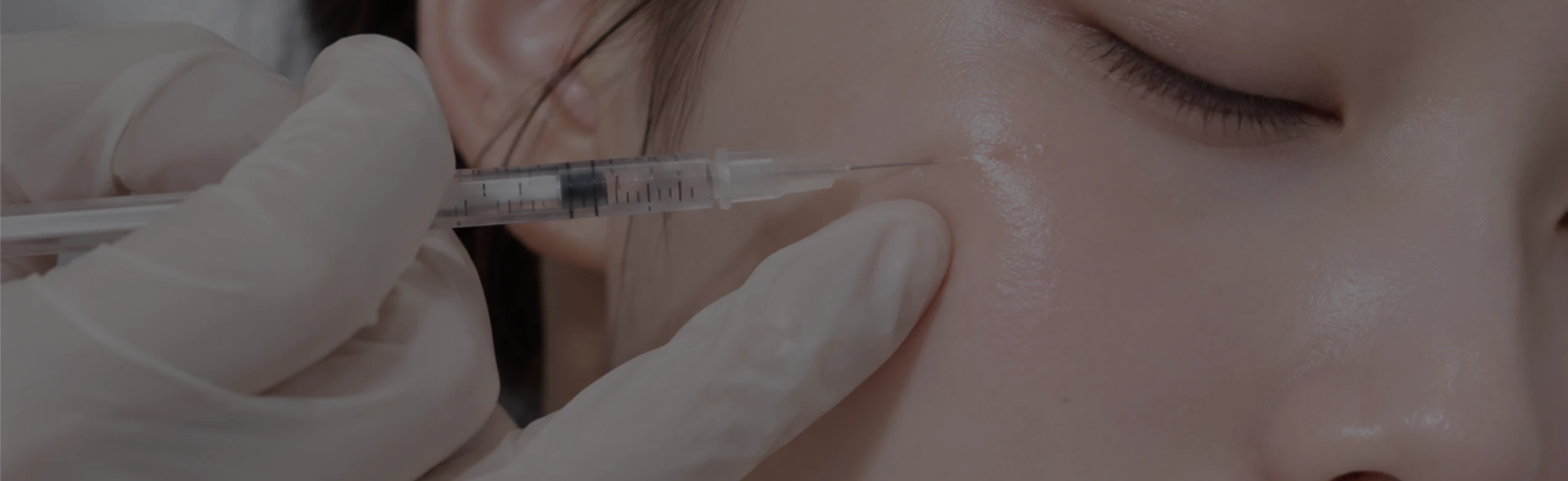
What it is
A skin booster delivers ingredients for hydration, texture and firmness into the upper layers of the skin through many tiny injections. Here the formula is set for each person. Dry skin, rough skin and uneven tone need different things, so the skin is assessed first and the blend comes second.
Ingredients are grouped by role: hydrating, texture-improving and firmness-supporting. No single ingredient covers all three, which is why they are combined, and the ratio differs for someone whose main issue is dryness versus texture. The formula is fixed before the first injection.
Products available
Violacell sorts the skin booster products it offers into six concerns. What actually goes into your blend depends on the consultation.
- Firmness and renewal: Rejuran, PDRN, Re2O, Juvelook, Laetigen, Ultracol, Hilo Wave (힐로웨이브).
- Hydration and inner dryness: Hilo Wave, Revive (리바이브), SkinVive, Rejuran, 하이주, Hyalrie (히알리에).
- Wrinkles and volume: Sculptra, Radiesse, AestheFill, Laetigen, Ultracol, GOURI.
- Pores and scars: Juvelook, Rejuran, EXO-V, PDRN.
- Soothing and breakouts: EXO-V, Rejuran, PDRN.
- Glow and brightness: EXO-V, GOURI, SkinVive, Juvelook.
Note that Sculptra, Radiesse and AestheFill are collagen stimulators. They work differently from hydrating boosters, with different technique, risks and recovery. Ask clearly whether any of them is in your blend.
Rejuran comes in several lines. They share the PN ingredient but differ in thickness and formulation, so they suit different areas. Violacell says the line and the injection areas are chosen together.
Depth set per area
Skin thickness differs across the forehead, around the eyes, the cheeks and the jawline. The same formula injected at a different depth behaves differently, so depth is set area by area.
As hydration and texture change, the way skin reflects light changes too, so tone is considered when choosing the formula. Changes usually appear gradually over the weeks after treatment, and responses and duration vary.
How it is done at Violacell
- Duration: about 15 to 30 minutes.
- Anesthesia: topical numbing cream.
- Discomfort: moderate (varies by person).
- Downtime: most people can go about their day as usual.
- Photo analysis: visitors can start with an Evelab AI skin analysis, used in the first consultation.
- Planning: based on hydration, texture, tone evenness and skin thickness, the doctor picks the areas, then the formula, depth and dose for each.
- Mixing and injection: the formula is prepared just before treatment and injected at the set depths in stages, with doses adjusted as the skin responds.
Who usually asks about it
- People whose skin always feels dry and tight.
- People with visible pores or fine lines where makeup sits poorly.
- People with uneven or dull-looking tone.
- People who would rather have a blend chosen for their skin than one standard product.
When to wait, or tell the doctor
- Pregnancy or breastfeeding.
- Active severe acne, dermatitis, eczema, cold sores or wounds on the face.
- Allergy to any ingredient. Some PN and PDRN products are fish-derived, so mention fish allergies.
- Clotting problems, or anticoagulant or antiplatelet medication.
- Recent ablative laser, peels or sunburn.
- Autoimmune conditions or a tendency to keloid scarring.
Possible reactions and risks
Small red dots and bumps at each injection point, mild swelling and bruising are common and usually fade within days. Bumps after PN products tend to be more visible and slower to settle than after hyaluronic acid boosters.
Temporary redness or itching, small firm spots and pigmentation are possible. If collagen stimulators are part of the blend, watch for delayed nodules. Infection and allergic reactions are rare. If redness, swelling, heat or pain keep increasing, contact the clinic.
Aftercare
- No makeup that day; do not touch or rub the injection points.
- Avoid saunas, alcohol and hard exercise for a few days.
- Pause exfoliants, strong acids and retinoids for a while; ask the doctor how long.
- Protect your skin from the sun.
- Follow the interval the doctor suggests for the next session. More often is not better.
Questions to ask before you book
- Which products go into your blend, brand and model, and how much of each?
- Is any collagen stimulator (Sculptra, Radiesse, AestheFill) included?
- Which areas, and is it done by hand or with an injector device?
- Which doctor will treat you on the day?
- You can ask to see the packaging opened before treatment, and to receive a sheet listing products and amounts used.
- What the quote includes, and how it changes if a product is swapped.
If contour rather than skin quality is your concern, see Design Filler. Practical details are in the Violacell visitor guide.
FAQ
Does the Violacell Skin Booster hurt?
Moderate, varying by person. Numbing cream is applied first; around the eyes and mouth you may feel more. If you are very sensitive, ask what else can be done.
When will I see a change?
Changes usually appear gradually over the weeks after treatment. Responses and duration vary.
How is it different from just getting Rejuran?
Rejuran is one product. The Violacell Skin Booster is a blend that may include Rejuran or combine it with other ingredients, depending on your skin.
Can I choose the product myself?
You can say what you would like, and the doctor will explain whether it suits your skin. Ask for the sheet listing what was used.
How often should I have it?
It depends on the products and your skin. Follow the doctor's suggested interval.
Can I wear makeup the next day?
Usually light makeup is fine once the entry points have closed. Follow the instructions you get on the day.