
What it is
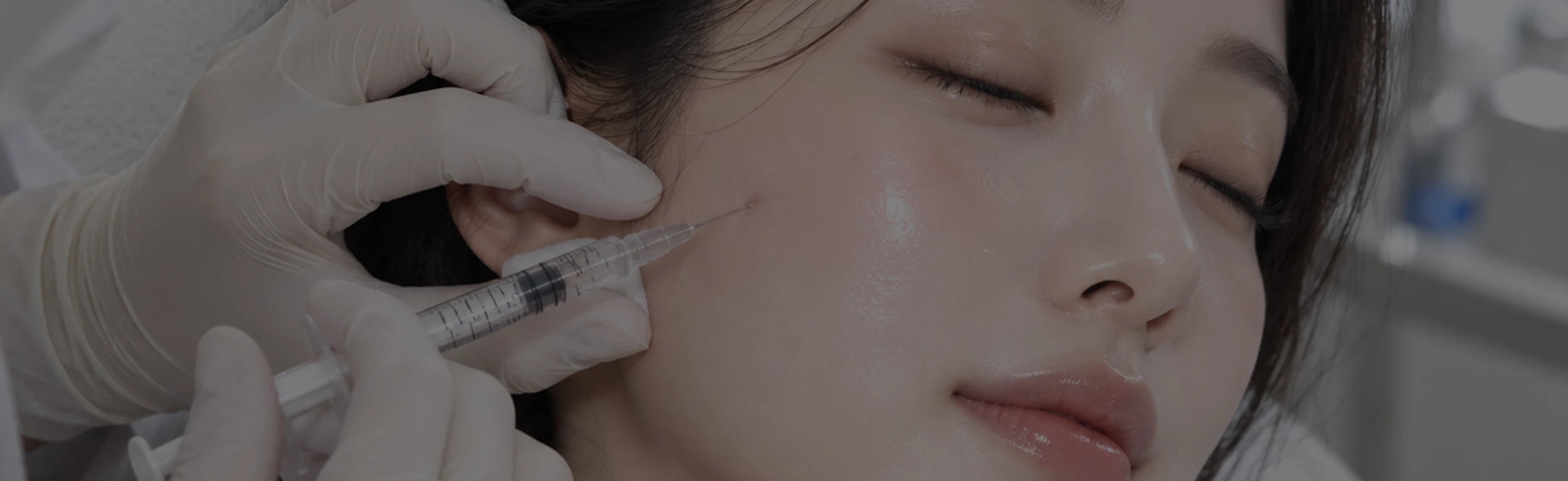
PRP stands for platelet-rich plasma. A small amount of your blood is drawn and spun in a centrifuge, which gathers the platelets scattered through the blood into one layer of plasma. That layer is then injected into the area being addressed. Everything injected comes from your own blood; nothing outside is added.
Why platelets? When you are injured, platelets are among the early arrivals at the wound, and they carry growth factors. PRP concentrates them and delivers them to a chosen spot. At Violacell it is generally used for skin firmness and texture, and for the scalp and the environment hair grows in. What changes, and by how much, differs from person to person.
How it is done at Violacell
- Time: about 30 to 40 minutes.
- Anesthesia: mainly local anesthesia. Numbing cream and cooling are available, and you can ask about sedation if you are anxious about pain.
- Discomfort: moderate (varies by person).
- Downtime: most people return to normal activities the same day.
- Photo analysis: your face (or scalp) is photographed with an Evelab device and the results are reviewed at your first consultation.
- Planning: the doctor decides which areas to treat and where and how much to inject at each point.
- Separation and injection: the drawn blood goes into the centrifuge, the platelet-rich plasma is separated, and the medical team injects it into the planned areas.
PRP can go into facial skin or the scalp, decided at consultation. If you are also considering the Hair Shot, ask the doctor how the two would fit together.
PRP or the stem cell program?
Both use your own blood. PRP takes the platelet-rich plasma and is injected into one area of skin or scalp. The stem cell program separates hematopoietic stem cells and growth factors, and can also be given intravenously. You and the doctor make the final call at consultation.
Who usually asks about it
- People who feel their skin recovers more slowly, or has lost firmness and smoothness.
- People who would rather use material from their own body than manufactured products.
- People concerned about their scalp, or whose hair is getting thinner.
When to hold off, or tell the doctor first
- Pregnancy or breastfeeding.
- Low platelets, a clotting problem, or taking anticoagulants or aspirin.
- Recent use of anti-inflammatory painkillers such as ibuprofen. The doctor may ask you to stop for a while beforehand.
- Inflammation, open acne, cold sores or flaring eczema where you would be injected.
- A history of cancer, anemia, or a chronic illness under treatment.
- Fainting with needles or blood draws.
Possible reactions and risks
- Redness, swelling and visible needle marks. On the face these usually settle within a day or two; after scalp injections, swelling can drift down to the forehead.
- Bruising at the draw or injection sites, fading over several days to a couple of weeks.
- A tight, aching feeling during and on the day of treatment.
- Infection in a small number of cases. Swelling that keeps worsening, pus or a fever means contacting the clinic right away.
It is your own blood, but the draw and the injections still carry a chance of bruising and infection. Response and duration vary from person to person.
Aftercare
- Do not rub the treated areas that day. Ask when you can wear makeup or wash your hair.
- Avoid alcohol, saunas and hard exercise for a few days.
- If you need pain relief, ask the doctor which kind; do not reach for anti-inflammatories on your own.
- Keep up sun protection and avoid strong sun.
Questions to ask before you go
- Will this be face, scalp or both, and how much blood will be drawn?
- Which centrifuge system and kit are used, and can I see the packaging before we start?
- Which doctor will do the injections on the day?
- Roughly how many sessions, and how far apart?
- Violacell says it gives a slip after treatment listing the products and amounts used. Ask for it.
- If you need Chinese interpretation, is the interpreter in on my day?
FAQ
How is PRP different from the stem cell program?
PRP separates platelet-rich plasma and is injected into one area of skin or scalp. The stem cell program separates hematopoietic stem cells and growth factors and can go into skin, vein or scalp. Which suits you is decided with the medical team.
Can PRP be used on the scalp?
Yes. At Violacell it is used on facial skin and on the scalp, often to care for the environment hair grows in.
How many sessions do I need?
It depends on your skin or scalp and your goals; the doctor explains this individually. Response and duration vary.
Can I go back to my hotel right away?
Usually, yes. With local anesthesia you can leave after a short rest. You may have needle marks and some redness; a mask helps.
If it is my own blood, is it risk-free?
No. Bruising, swelling and soreness are possible, and a few people get an infection. Tell the doctor about any clotting problem or blood-thinning medication.