
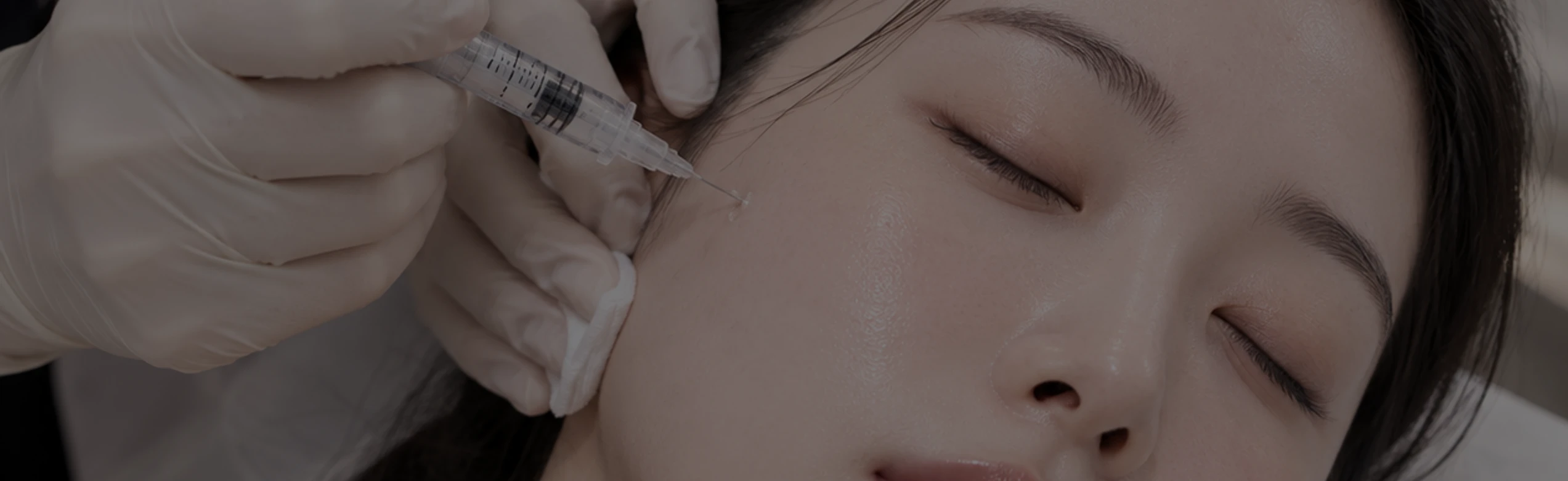
What it is
Violacell lists this program under its Anti-aging Center, as part of what it calls the Olacell line. A sample of your venous blood is drawn, a separation device isolates hematopoietic stem cells and a range of growth factors from it, and that material is injected back into the area being addressed. Nothing manufactured outside your body is added.
Cultured stem cell work is a different process. Culturing means sending cells to a lab to multiply, which takes time and usually a second visit. Violacell's program skips that step: blood draw, separation and injection all happen on the same day, in one visit.
For the extraction system used and its approval status in Korea, ask to see the device name and its licensing documents at your consultation, and ask to see the packaging of the consumables before the procedure starts.
How it is done at Violacell
- Time: about 30 to 40 minutes, not counting consultation and waiting.
- Anesthesia: local anesthesia or sleep sedation, agreed at consultation.
- Discomfort: moderate (varies by person). There is the blood draw, then the injections.
- Downtime: most people return to normal activities the same day. Some redness or swelling at injection points is common.
- Photo analysis: your face is photographed once with an Evelab device to look at skin condition and sagging, and the results feed into the first consultation.
- Planning: the doctor decides the injection route and areas, and for multi-area plans, the amount for each point.
- Draw, separate, inject: venous blood is drawn, processed in the device, and the medical team injects the separated material into the planned areas.
There are three possible routes: the dermis of the skin, a vein, or the scalp. The doctor decides which route and which areas after the consultation.
Because the program involves both a blood draw and injections, there are several ways to manage pain: layered numbing cream under a film, extra local anesthetic injections for sensitive areas, sleep sedation for people who are anxious about pain, and cooling around the treatment. Which ones you use depends on you and on the doctor's advice.
How it differs from PRP
Both start with your own blood. PRP uses a centrifuge to concentrate platelet-rich plasma and is injected into one area of skin or scalp. The stem cell program separates hematopoietic stem cells and growth factors and can also go intravenously. Which one suits you is decided with the doctor at consultation.
Who usually asks about it
- People who feel their skin is starting to lose firmness and want to learn about autologous options.
- People who prefer material from their own body to manufactured products.
- People whose hair is getting finer, or who are concerned about their scalp.
These are the people who usually ask. Being on the list does not mean the program is right for you; that is decided at consultation.
When to hold off, or tell the doctor first
- Pregnancy, trying to conceive, or breastfeeding.
- Fever, a cold, or inflammation, wounds or an active skin condition where you would be injected.
- Blood disorders, or taking anticoagulants, aspirin or other drugs that affect clotting.
- Any history of cancer, or a chronic illness under treatment.
- Fainting at the sight of needles or blood, or a past faint during a blood draw.
- Previous allergy or bad reaction to sedation, if you plan to be sedated.
Possible reactions and risks
- Bruising and mild swelling at the draw and injection sites, usually fading over a few days.
- Redness, warmth and tenderness where you were injected.
- With the intravenous route, irritation or a small hard spot along the vein.
- Infection or allergic reaction in a small number of people. Swelling that keeps getting worse, or a fever, means contacting the clinic straight away.
- Sedation has risks of its own. Do not drive that day and have someone with you.
How much change you see, how fast, and how long it lasts differ from person to person. No clinic should promise you a specific result.
Aftercare
- Do not rub or press the injected areas that day. Ask the doctor when you can wash your face and wear makeup.
- Skip alcohol, saunas and hard exercise on the day.
- If you were sedated, rest until fully awake and do not drive.
- Before you fly home, confirm how to reach the clinic if something feels wrong.
Questions to ask before you go
- Which extraction system is used, and can I see its Korean licensing documents?
- Which route will be used this time, how much blood will be drawn, and where will it be injected?
- Which doctor will do the draw and the injections on the day?
- Which anesthesia will I have, and do I need to fast for sedation?
- Can I see the consumable packaging before we start? Violacell says it hands out a slip after treatment listing the products and amounts used; ask for it.
- Violacell has Chinese interpretation; if you need it, check that the interpreter is in on your day.
FAQ
How is this different from cultured stem cell treatment?
Culturing multiplies cells in a lab, which takes time and a second visit. Violacell's program draws, separates and injects on the same day without culturing. The two approaches have different aims.
Is the skin or the vein better?
There are three routes; the doctor decides which route and which areas after the consultation.
How many sessions will I need?
That depends on your skin, the route and your goals, and the doctor will explain it individually. Response and duration vary from person to person.
Can I go sightseeing afterwards?
With local anesthesia, most people can carry on after a short rest. After sedation, wait until you are fully awake, and do not drive or drink that day.
Is this a treatment for disease?
No, and it should not be thought of that way. It is one of Violacell's anti-aging programs. If you have a medical condition, see the appropriate doctor for it.