
What it is
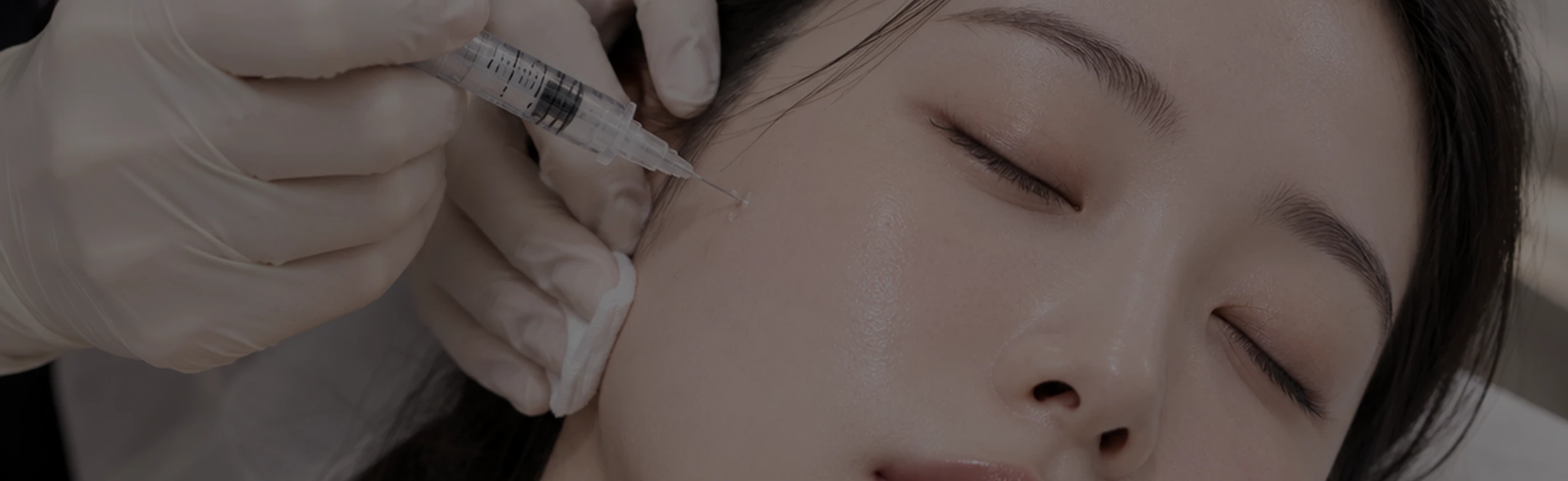
Olacell Lifting is a combination program built from Olacell injections and a lifting device. Violacell says the aim is to lift the contours you can see while also working on the condition of the skin itself, so injections and lifting energy are planned together. People who ask about it usually notice several things at once. The skin feels less firm, fine lines are more visible, the tone looks duller, and the jawline and cheeks are less defined than they used to be.
Olacell injections have their own page, where Violacell lists them as a stem-cell skin injection; see Olacell Injection. The injection uses your own blood: it is drawn on the day, processed in a Korea MFDS-licensed blood-processing device (PROPRP, license No. 제허 12-787호) by centrifugation, and then injected. The amount is set by the doctor after the consultation, and you can ask to see the device and consumables before treatment.
Response and how long it lasts differ from person to person, depending on skin thickness, fat volume, the direction of sagging, age and lifestyle. Only a doctor who has examined you can give a realistic picture.
How it is done at Violacell
- Treatment time: about 20 to 30 minutes. Consultation, blood draw, centrifugation and numbing are extra, so plan for half a day.
- Anesthesia: topical numbing cream.
- Discomfort: mild (varies by person). Expect some pressure or aching where the device passes near bone, and a sting at each injection point. Tell the staff if it is too much.
- Downtime: usually 2 to 7 days. Redness, swelling, small bumps at injection points and bruising are possible during this time.
The process has four steps:
- Assessment: the doctor checks how firm the skin is, which direction it is sagging, and the state of your contours and texture, then decides what to focus on.
- Planning: based on that, the injection ingredients and sites are chosen, along with the area and intensity of the lifting device.
- Treatment: Olacell injections are given and lifting energy is applied. Injection depth, spacing and order are matched to the depth the chosen device works at.
- Aftercare: the treated area is soothed, and staff explain what the next few days look like, daily care, and the suggested interval before another session.
The lifting device is chosen for you. Violacell's equipment includes Ultherapy PRIME, Thermage FLX, Shurink Universe, XERF and Virtue RF among others; the first two represent focused ultrasound and radiofrequency respectively. Which device and how many shots are used is decided at the consultation, so you do not need to pick one yourself.
Who usually asks about it
- People whose skin feels less firm and whose facial outline has started to soften.
- People with noticeable fine lines and sagging who want to address both together.
- People who want a subtle, natural-looking change.
- People who want skin condition and firmness handled in the same visit.
If sagging is advanced, for example a clearly dropped jawline or loose neck skin, a non-surgical program has limits. The doctor may talk to you about other options. Describing exactly what bothers you is more useful than saying you want to look younger.
When to hold off
- During pregnancy or breastfeeding.
- If you have active inflammation, infection, open wounds, active acne or a cold sore on the face.
- If you have a bleeding disorder or take blood thinners, aspirin or supplements such as fish oil or ginkgo. Bruising after blood draws and injections is more likely; tell the doctor.
- If you have an autoimmune disease, a blood disorder, are being treated for cancer, or are currently feverish or unwell. This program involves drawing your blood and injecting the processed components, so mention these clearly.
- If you have metal implants in the face or a pacemaker. The doctor needs to decide whether radiofrequency devices are suitable.
- If you recently had fillers or thread lifting in the same area. Tell the doctor the date and the product.
- If you scar easily or reacted strongly to earlier treatments.
Possible reactions and risks
Common: redness, swelling, small bumps or bruising at injection points; redness, warmth, mild swelling and tenderness where the device was used. Most of this settles within a few days to a week, which is why 2 to 7 days of downtime is usually planned.
Less common but worth knowing: burns or blisters from device energy, temporary numbness, temporary asymmetry, infection or lumps at injection sites. The general risks of injections and blood draws, such as infection, bruising and lumps, still apply.
Contact the clinic right away if you develop a fever, swelling or pain that keeps getting worse, skin that turns pale or purple, or any discharge. Before flying home, ask whom to contact if something comes up later.
Aftercare
- Wash your face and apply makeup only when the doctor says it is fine. Do not rub or press the injection points.
- For a few days, avoid saunas, hot baths, hot springs, hard exercise and alcohol.
- Use sunscreen and moisturizer, and wear a hat outdoors.
- Do not add other lasers, peels or exfoliation for a week or two without asking the doctor.
- Follow the interval the doctor gives for any next session. Going more often does not help.
What to ask before you go
- How much blood is drawn, how long it takes from draw to centrifugation to injection, and what preparation is needed on the day.
- The injection is processed with a Korea MFDS-licensed blood-processing device (PROPRP, license No. 제허 12-787호). You can ask to see the device and consumables before treatment.
- Which lifting device and which generation, how many shots, and over which areas.
- Which doctor will treat you that day.
- You can ask to see the product package and its opening before treatment. Violacell says it provides a note listing the products and amounts used after treatment; ask for it.
- Chinese interpretation is available. Ask whether an interpreter is on duty on your day.
- What the quote includes and whether anything is charged separately. Prices are not listed on this page.
FAQ
How is Olacell Lifting different from an Olacell injection alone?
The injection program is injections only. Olacell Lifting adds a lifting device in the same session. Which one suits you depends on how much sagging there is and what you want to change; the doctor will explain at the consultation. See Olacell Injection.
Is Olacell Lifting a stem-cell treatment?
Violacell lists Olacell injections as a stem-cell skin injection. In practice, your own blood is drawn on the day, processed in a Korea MFDS-licensed blood-processing device (PROPRP, license No. 제허 12-787호) by centrifugation, and injected into the skin. You can ask to see the device and consumables before treatment.
Can I have it on the day of my consultation?
Violacell says yes, if a suitable treatment is agreed, there are no safety concerns and there is time. Treatments that need preparation or recovery planning are booked separately. If your schedule is tight, mention your departure date when booking.
How soon can I be seen in public?
Downtime is usually 2 to 7 days. Redness, bumps and bruising vary, so leave a week before an important event if you can.
How many sessions will I need?
The doctor explains a suggested interval after treatment. The number of sessions depends on you.
Can I fly home afterwards?
Most people can, but ask the doctor about your case. Swelling may feel tighter during a flight. Take the aftercare notes and the clinic's contact details with you.