
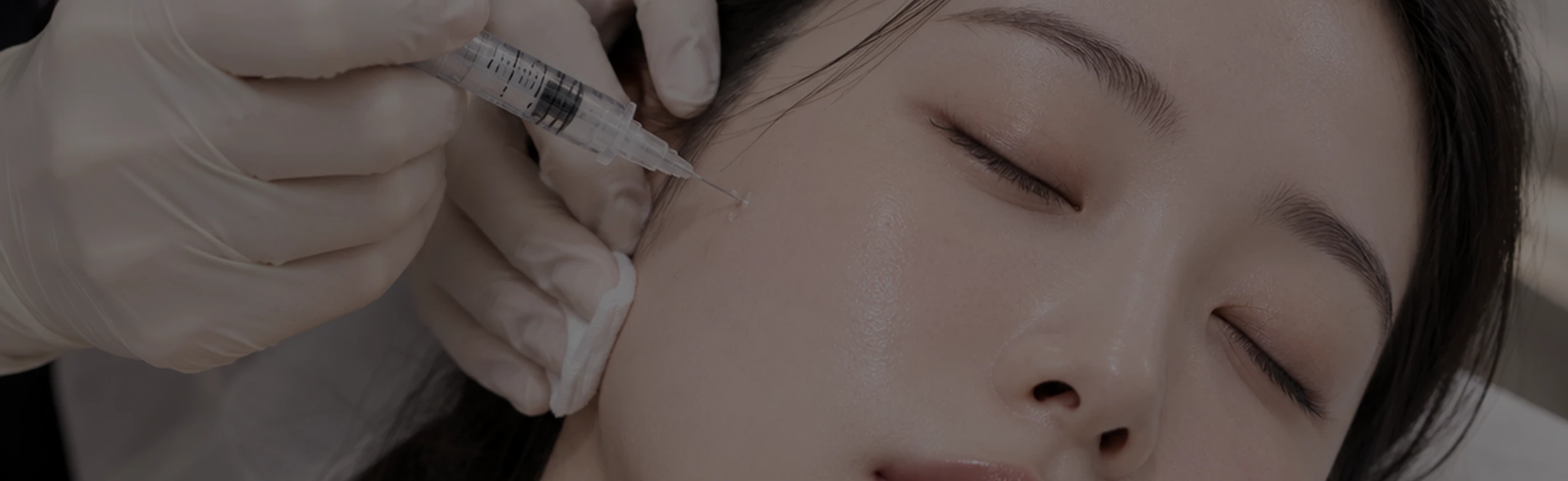
What it is
CELL Lifting is a combination program. Violacell says a regenerative plan is tailored to your skin and carried out together with lifting, to address loss of elasticity, fine lines, dull tone and weakened skin. At the consultation the doctor decides the treatment range and interval for the regenerative components.
The injection uses your own blood: it is drawn on the day, processed in a Korea MFDS-licensed blood-processing device (PROPRP, license No. 제허 12-787호) by centrifugation, and then injected. Violacell says there is no cell-culture step, so nothing is stored and you do not need to come back later for the injection. You can ask to see the device and consumables before treatment.
Response and how long it lasts depend on your skin, age and habits, and only a doctor who has examined you can give a realistic picture.
How it differs from Olacell Lifting and Olacell Injection
Olacell Injection is injections only. Olacell Lifting adds a lifting device, with downtime of usually 2 to 7 days. CELL Lifting also pairs regenerative injections with lifting; the treatment takes a little longer, and most people return to daily life right away. Ask the doctor directly how the ingredients, devices and intensity differ: for my skin, which of the three makes sense, and why?
How it is done at Violacell
- Treatment time: about 30 to 40 minutes. Consultation, blood draw, centrifugation and numbing are extra, so plan for half a day.
- Anesthesia: topical numbing cream.
- Discomfort: mild (varies by person). Expect a sting from the blood draw and injections and an ache where the lifting device is used.
- Downtime: most people return to daily life right away. Small bumps, redness or bruising at injection points can still last a few days.
- Assessment: firmness, degree of damage, texture and tone, to set a recovery goal.
- Planning: which regenerative components to use, over which areas, and how.
- Treatment: the components are injected into the skin together with lifting, focused on firmness and the condition of the skin.
- Aftercare: the skin is soothed, and staff explain moisturizing, sun protection and the suggested interval.
Who usually asks about it
- People whose skin looks tired because it has lost firmness.
- People with damaged skin looking for repair and recovery.
- People who want to work on both fine lines and tone.
- People with dry or sensitive skin. Mention your sensitivity at the consultation; the lifting intensity may need adjusting.
When to hold off
- During pregnancy or breastfeeding.
- If you are feverish or unwell, or have anemia or a blood disorder. Blood is drawn for this program, so tell the doctor.
- If you have an autoimmune disease, are being treated for cancer, or take long-term steroids or immunosuppressants. Mention it clearly.
- If you have a bleeding disorder or take blood thinners or aspirin; bruising after blood draws and injections is more likely.
- If you have active inflammation, infection, wounds or a cold sore on the face.
- If you have metal implants in the face or a pacemaker; the doctor needs to decide about the lifting device.
- If you recently had filler or other injections in the same area. Tell the doctor the date and product.
Possible reactions and risks
Common: bruising at the blood-draw site; redness, small bumps, mild swelling or bruising at injection points; redness and warmth where the device was used. Most of this fades within a few days.
Risks to know about: infection or lumps at injection sites, occasional unevenness, and, less commonly, burns, blisters or numbness from the lifting device. The general risks of injections and blood draws, such as infection, bruising and lumps, still apply.
Contact the clinic quickly if you develop a fever, swelling or pain that keeps getting worse, skin that turns pale or purple, or any discharge.
Aftercare
- Do not rub or press injection points on the day; wash your face and apply makeup when the doctor says so.
- Moisturize well and use sunscreen. The doctor will stress these two at the aftercare step.
- For a few days, avoid saunas, hot springs, hard exercise and alcohol.
- Do not add other lasers, peels or exfoliation for a week or two without asking the doctor.
- Follow the interval the doctor gives for any next session.
What to ask before you go
- How much blood is drawn, how long it takes from draw to centrifugation to injection, and what preparation is needed on the day.
- The injection is processed with a Korea MFDS-licensed blood-processing device (PROPRP, license No. 제허 12-787호). You can ask to see the device and consumables before treatment.
- Which lifting device is used and how many shots.
- For your skin, whether CELL Lifting, Olacell Lifting or injections alone is the better fit, and what the difference is.
- Which doctor will treat you that day.
- You can ask to see the product package and its opening before treatment. Violacell says it provides a note listing the products and amounts used after treatment; ask for it.
- Whether an interpreter is on duty that day, and what the quote includes. Prices are not listed on this page.
FAQ
What is injected in CELL Lifting?
Your own blood, drawn on the day and processed in a Korea MFDS-licensed blood-processing device (PROPRP, license No. 제허 12-787호) by centrifugation before injection. You can ask to see the device and consumables before treatment.
Are cells cultured, and do I need to come back later?
No. Violacell says there is no cell-culture step, so nothing is stored for a later visit.
Can I go about my day right after?
Most people can. Small bumps or redness at injection points may last a few days, so leave some time before an important event.
Is it suitable for sensitive skin?
Dry and sensitive skin are among the concerns people bring. Whether it suits you, and how the lifting intensity should be adjusted, is for the doctor to decide after hearing about your skin.
Can I have it on the day of my consultation?
Violacell says yes, if a suitable treatment is agreed, there are no safety concerns and there is time. Treatments that need preparation are booked separately.
How many sessions will I need?
It depends on you. The doctor explains a suggested interval after treatment.